

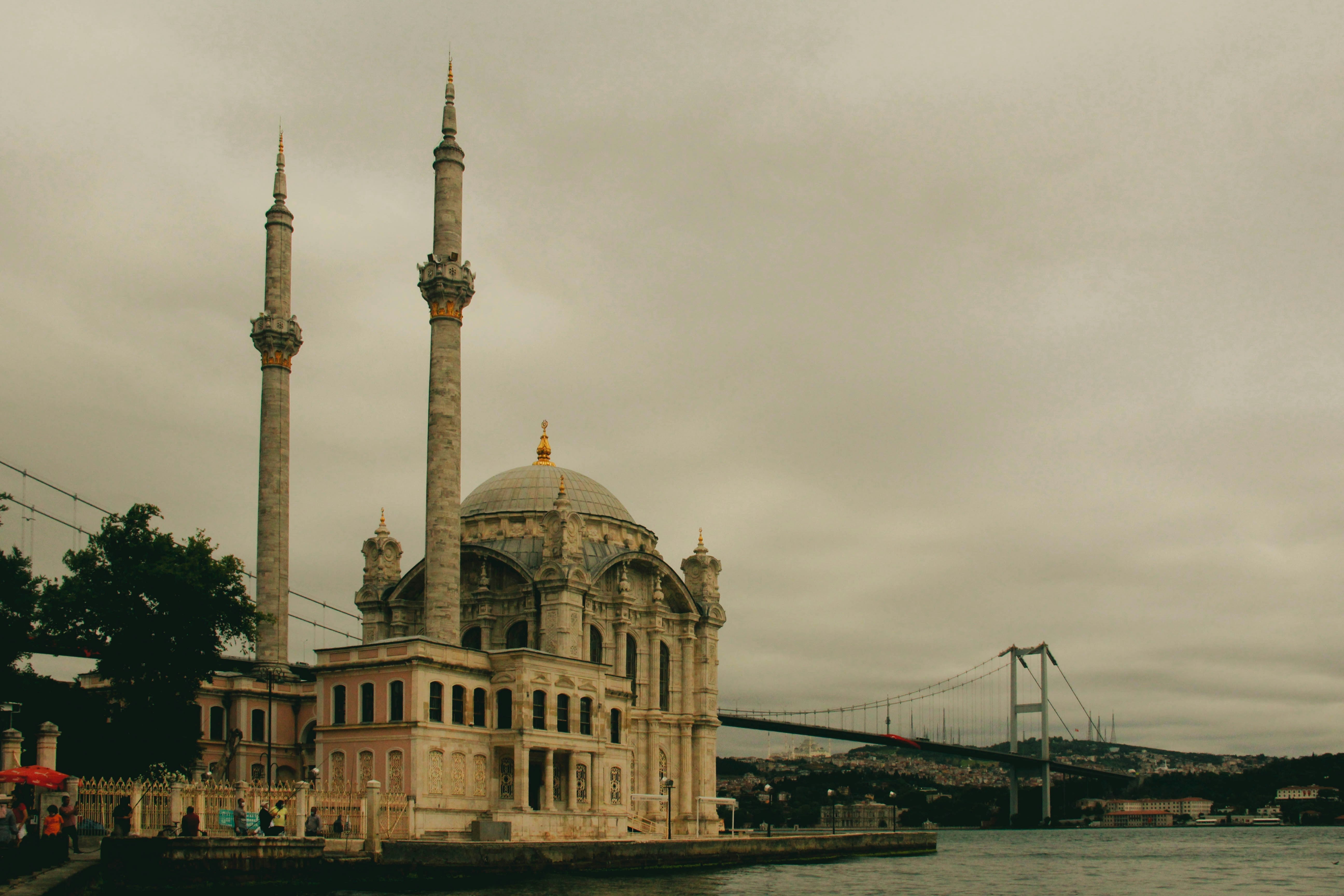
The Boy from Instanbul by Ulduz Iskenderova
We hear stories about other people's lives every day.
We see them on television, read about them in the news, and scroll past them on social media. For a brief moment they move us. They make us pause. They awaken our compassion.
Then another headline appears.
Another tragedy.
Another story.
And little by little, the previous one fades from memory.
Perhaps that is because it always happens somewhere else.
To someone else.
Yet every now and then, a single unexpected encounter has the power to change the way we see the world forever.
More than ten years ago, during my first year as a journalism student, I travelled to Istanbul for the first time.
It was the middle of summer.
Tourists wandered through the crowded streets, stopping to admire the city, taking photographs, drifting from one shop to another beneath the afternoon sun.
Amid the noise of the city, a small boy walked up to me.
He could not have been more than five years old.
In his hands he carried a packet of paper tissues.
He did not ask for money.
He simply held them out, hoping I might buy them.
That was how I met a Syrian refugee.
At the time, there were far fewer Syrian refugees in Istanbul than there are today.
The boy spoke only a little Turkish, but as a first-year journalism student I was fascinated by his story. It felt like my first real interview. Only this time, my interviewee was a five-year-old child.
We spoke however we could. Sometimes with words. Sometimes with gestures. And sometimes without either.
I still remember his small, dusty hands wrapped tightly around the packet of tissues. He seemed afraid to let go of it, even for a moment. Perhaps because it was his job. A job no five-year-old child should ever have.
He tried to explain why his family had left Syria. He spoke slowly, searching for the right words. And when words failed him, he used his hands instead.
He wanted me to understand that if I had been in his country and walked outside without covering my hair, I could have been killed.
Without saying another word, he drew his hand across his neck.
The gesture said everything.
He never looked me in the eyes. Instead, he kept tracing circles on the pavement with the toe of his worn-out shoe, as though he were talking about someone else's life instead of his own.
His T-shirt had faded beneath the sun and hung loosely from his small frame. His trousers were far too large and kept slipping down.
But more than anything else, I remember his eyes.
They held none of the curiosity that usually belongs to childhood. No mischief. No sense that the world was still waiting to be discovered.
Instead, there was the quiet exhaustion of someone who had been forced to grow up far too soon.
And yet, among the friends he had left behind, children who had never escaped the war, he was considered one of the lucky ones.
That was the first time the word 'lucky' meant something entirely different to me.
He was not lucky because he had a happy childhood.
He was lucky because he had survived. Because his entire family had made it out alive.
We read stories like his every day. But there is an enormous difference between reading a headline and standing in front of a living human being.
The moment you look into someone's eyes, hear their voice, and witness their emotions, another person's tragedy stops being information.
It becomes something you carry with you.
After that day, I returned to my ordinary life. There were lectures again. Exams. Everyday routines. The small worries that had once seemed so important.
But whenever I caught myself complaining about life, I thought of that little boy.
A child who had already gone to work at the age of five.
That was the moment I truly began to question what happiness really means.
We spend so much of our lives searching for it in success, careers, possessions and recognition.
But sometimes happiness is hearing silence instead of explosions.
Sometimes it is waking up knowing that those you love are still alive.
Sometimes it is simply being allowed to live one more ordinary day.
The little boy who offered me those paper tissues beneath Galata Tower could never have imagined that our brief encounter would remain with me for so many years.
More than a decade has passed.
Yet I still remember him.
The little boy who silently held out a packet of tissues.
And, without ever knowing it, changed the way I would understand happiness for the rest of my life.
Bio:
Ulduz Iskenderova is an Azerbaijani journalist and essayist whose work explores psychology, philosophy, and contemporary culture through personal and reflective essays.
Leave a comment
This site is protected by hCaptcha and the hCaptcha Privacy Policy and Terms of Service apply.